Categories
Uncategorized

Autoethnography Project

Hi Guys! Welcome back to the final blog post of this semester! Below, I have posted my Autoethnography Project. I hope you enjoy!

The Effect of COVID-19 on Healthcare Workers

Introduction

COVID-19 is a specific type of Coronavirus that emerged in Wuhan, China in December of 2019. The disease is a virus that attacks the respiratory system and is highly fatal. The disease is new and treatments are difficult as doctors do not understand the virus yet. The disease began to spread exponentially with China and quickly overwhelmed the healthcare system. Too many were sick to treat, forcing ill people to die at home without treatment. In January, the disease began to spread outside of China. COVID-19 cases arose in India, Philippines, Russia, Spain, Sweden, the United Kingdom, Australia, Canada, Germany, Japan, Singapore, the US, the UAE and Vietnam within a few days (Muccari, 2020). COVID-19 reached America, and by March most of the nation was put on Stay-at-home orders. Everything except essential businesses were shut down (Muccari, 2020). Healthcare workers are needed now more than ever, but the risk of going to work is also much higher.

COVID-19 has had an effect on everyone within the United States. Many states are adhering to strict stay-at-home orders and the entire nation is encouraged to abide by social distancing. Businesses deemed non-essential are all shut down and the date for reopening is very unclear. Schools have all been changed to virtual learning. Everyone has been affected; however, there is a community that lives have largely changed during this time. The healthcare workers are facing exposure to this virus at work. 

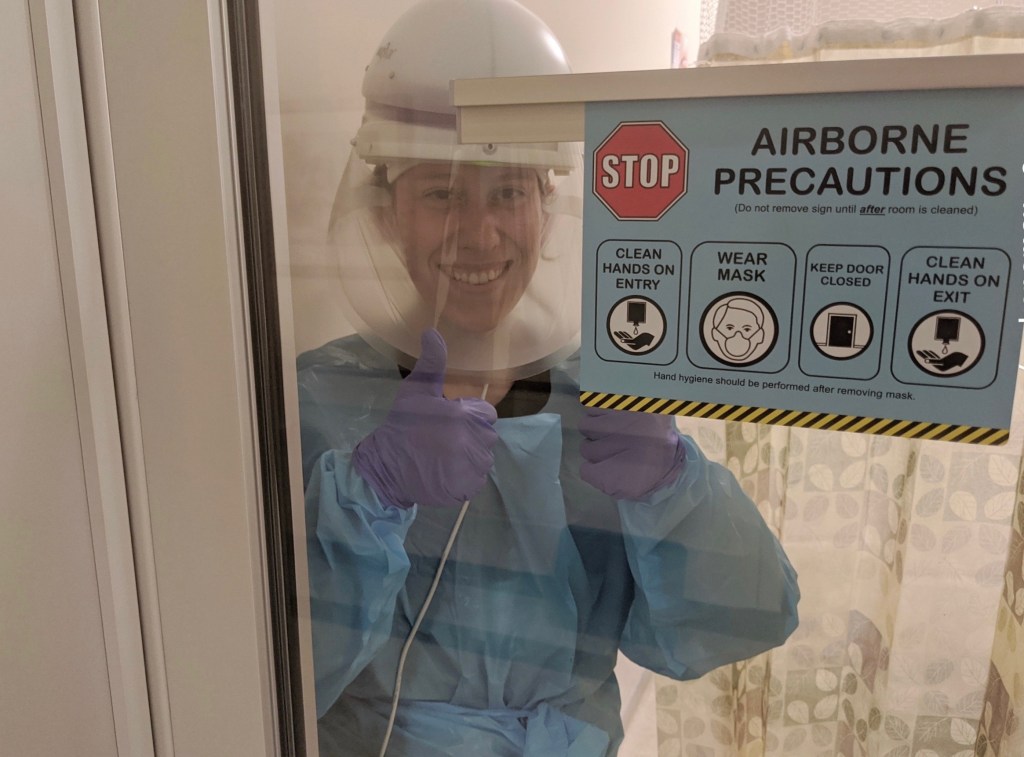
As an Emergency Room and Trauma EMT, I work in the hot zone. My work life has changed tremendously since the beginning of COVID-19. I am exposed to COVID-19 patients. I have seen cases ranging from very mild to incredibly severe. I have been with patients as they succumb to the virus. All of the emergency room staff has had to adjust to this new normal. Being in this environment, I am seeing the changes in people’s lives around me. I wanted to further investigate the changes that healthcare workers are facing in their lives due to this pandemic. 

This autoethnography investigates how different healthcare workers on the frontline are being affected. I will investigate how their daily lives, work lives, and how other people view them has changed. I have formatted my autoethnography to investigate the following driving questions.

  1. What emotions do I feel going to work now versus prior to the COVID 19 pandemic?
  2. How has work changed for me?
  3. How has my daily life been affected?
  4. Am I a hero?

Methodology

In order to investigate the effect of COVID-19 on healthcare workers, I began by conducting both primary and secondary research. I will be sharing the information of my own narrative, along with others. I chose to interview three healthcare workers, Dylan Augenstein, Nayiri Alexander, and a coworker. These are all healthcare workers with very different experiences and responsibilities outside of work. I wanted to see how their perspectives may vary, even though they share a common career. I also chose to interview my mother, a non-healthcare worker, in order to get an outsider’s perspective on how healthcare worker’s lives are being affected. 

Primary Research

My Narrative

I am currently a sophomore, studying biology and chemistry at Chapman University. I am a pre-med student. I live in Orange County with my two moms and brother. COVID-19 has had a large impact on my life. On March 11th, Chapman was moved to online learning. My seven classes and multiple labs would now be done within the confines of my own room. We did not know what was in store for us regarding COVID. Would we soon turn into the next New York? Would I be forced to work every single night, as my hospital is overwhelmed with COVID patients? I used to stroll through the emergency room, maskless, and even with my hair down sometimes. I took precautions, but we were all pretty relaxed. We soon started wearing tight n95 masks, a surgical mask over that, a face shield, and a surgical hair cap. However, masks were running short so we had to rewear them shift after shift. This is a common problem in hospitals in the US. The FDA has confirmed a global shortage of personal protective equipment. Healthcare workers are forced to re-wear single-use PPE, making it less safe for the patient and healthcare worker (FDA, 2020). 

  • What emotions do I feel going to work now versus prior to the COVID 19 pandemic? How has work changed for me?

Prior to going to COVID-19, I had become very accustomed to the environment of the emergency room. I have worked there for nearly two years. I know what is expected of me and I feel prepared for what happens. This changed for me when the pandemic began. We now had to question every patient who walked into the emergency room. Have they traveled? Do they have respiratory symptoms? The whole emergency room’s aura had changed. I have never been fearful of my job. I still am not fearful for myself, but I have developed a new fear. I fear that I will spread the virus to my family. I risk exposure to many different illnesses at work. I have been exposed to MRSA, C-DIFF, tuberculosis, among others. I signed up for that as a healthcare worker. However, my family did not sign up to be exposed to a potentially lethal disease. I would never be able to live with the guilt of getting my parents sick. I have a specific instance where I felt the change in emotions regarding exposure at work. 

I was recently majorly exposed to COVID because I was in the room with a patient and was not properly equipped with PPE. I was with one other person in the room when the patient’s heart stopped and I began on CPR while the other person began to ventilate him. These are two of the most dangerous positions to be in with a COVID patient because CPR and ventilation aerosolized the virus. While we were doing this, the people outside of the room were getting their proper gear on in order to come in. I could have left the room. No one would have judged me for it. This was never a consideration we would have made in the past. Deciding whether to run into the room of a person who is quite literally dying, is something new to all of us. However, that never is something that could cross my mind. Those minutes it took for other people to come in were minutes that his heart was still circulating blood and I would never value my own self over him. For the days after this exposure, I felt like the most selfish person in the world because I could have brought it home to my family. I value someone else’s safety over my own, but I am not the only one to consider. We are putting ourselves and our own families at by going to work. Now, a selfless act can feel quite selfish now. 

  • How has my daily life been affected?

My daily life looks a lot different now. I used to go to school five days a week. I was sometimes until past midnight. I spent time in office hours, with friends studying, at nearby restaurants. The pre-med course load is not an easy one and can be quite overwhelming. I am now doing it within the confines of my bedroom. I no longer can hug my family and try to social distance within my own home. I try to stay away from my family inside of the house, which is hard because I am so close to them. Inside of work, the public has been very kind to us. People bring food and gifts to the emergency room staff. I have noticed that I am thanked at work much more often. Outside of work, my family calls me a hero. They worry about my safety, but have a lot of respect for me. 

  • Am I a hero?

This question interested me because of the public’s response to healthcare workers during this time. Everyone is calling us heroes, but I wanted to see if healthcare workers viewed themselves in the same light. For me, I do not. I still see myself as the same person I always have been. Going to work is not heroic for me. I signed up to be a healthcare worker and this is a time that healthcare workers are needed more than ever. 

Interview with Dylan Augenstein

Dylan is my brother who is also a paramedic. He works as a paramedic in both Riverside and Orange County. He is 23 years old. 

  • What emotions do I feel going to work now versus prior to the COVID 19 pandemic?

“I don’t really feel different going to work. I am just fearful that I will get my parents sick. They are all that really comes to my mind when I worry.”

  • How has my daily life been affected?

“People outside of work call me a hero. They say that I am risking my life and tell me how thankful they are for me. When I am at work it is very different. Everyone sees me as dirty. I have been denied the use of restrooms in restaurants, at gas stations, even at hospitals. On a twelve-hour shift, I once didn’t get to use the restroom. Before this, people never did this. People treated us well and appreciated us. Now, they call us heroes, but don’t want us anywhere near them.”

  • Am I a hero?

Hahaha, no definitely not. I just go to work and do my job. Nothing heroic about it.”

Interview with Nayiri Alexander

Nayiri Alexander is a sophomore at Chapman University studying biology and chemistry. She is a pre-med student. She also works as an ER and Trauma EMT in Orange County. 

  • What emotions do I feel going to work now versus prior to the COVID 19 pandemic?

“I don’t really feel any different emotions about going to work than I did before when it pertains to myself. I just worry that my family will get sick and it will be all my fault. My parents initially wanted me to stop working. They thought it was too dangerous. But I could never. This is what I signed up for.”

  • How has work changed for me?

“Everything feels like it has changed at work. All of a sudden we are suspicious of every patient and nearly everyone is a COVID rule out. It just seems like overnight everything changed. I do feel like everyone at work is more of a family now.”

  • How has my daily life been affected?

“Overnight, everything was locked down. School was shut down and now I am stuck doing seven classes all by myself. I lost the support of classmates and professors for interpersonal interactions. I am still expected to maintain perfect grades, even though nothing is normal. There is more support from the public. People bring us food and make signs. Outside of work, my family has been supportive. I have received many loving messages of thanks. However, I have noticed that my family and others do not want to be around me during this time. They think I am a carrier and are scared of me.”

  • Am I a hero?

Nayriri began by laughing at this question. “No, no, I don’t think so. Hero? No. I think that people view us as heroes because we are running towards the center of danger, not away from it. This is a heroic quality. But I still see it as going to do the job that I signed up for.”

Interview with Coworker

My coworker chose to stay anonymous for this interview. She works with me as an ER and Trauma Tech. She is currently not in school, so her life looks different than mine or Nayiri’s. 

  • What emotions do I feel going to work now versus prior to the COVID 19 pandemic?

“My emotions for work haven’t really changed. I am just now more cautious. My mother has a cardiac history, so I worry about her getting ill.”

  • How has my daily life been affected?

“I now am practicing self-isolation. I do not leave my room until my family has gone to bed or before they get up in the morning. Even though I still live at home, I am confining myself to my bedroom in order to not expose my family. This is a very lonely existence.”

  • Am I a hero?

“This is a very interesting question. My answer has to be no, but I understand why someone would say yes. I understand why the public would say yes. I think that people performing heroic acts do not go about them with the mindset of being a hero.”

Interview with Sondra Piorek

Sondra Piorek is my mother. She was able to give an outsider’s perspective of how she sees her healthcare worker son and daughter’s lives being changed. 

  • How do you feel about your kids working in medicine during this time?

“As a mother, I am very worried. I do not want anything to happen to either of my kids. They are my world. I love them and am so proud of them.”

  • How do you think work has changed for healthcare workers during this time?

“I can speak for what I see my kids going through. I see photos of Makena at work, wearing multiple masks and face shields. She comes home with her nose bleeding from skin irritation and constant headaches because her mask doesn’t allow her to breathe well.”

  • Are healthcare workers heroes?

“Absolutely. My kids are my absolute heroes. They are young, in their 20’s, risking their lives to help other people. They are not doctors with huge paychecks. They are doing this because they truly believe in helping people. My son is a tiny box of an ambulance breathing the same air as COVID patients. Makena is performing CPR on COVID patients, sometimes unequipped, and doesn’t think a thing of it. She has wounds on her face from her mask. Healthcare workers are all heroes.”

Analysis 

There were many interesting points that were made in my investigation. I have found three main conclusions that were most interesting. A common thought that appeared in every interview was the response to the question about emotions regarding going to work. All healthcare workers answered that they were not scared to go to work, but scared to bring the disease home to their families. It appears that healthcare workers are used to being exposed to different illnesses, but the guilt of bringing one of these diseases home is too much to bear. In this time where people are referring to going to work as heroic, it seems that healthcare workers are actually feeling guilty. Going to work is a selfless act during this time, but feels selfish as well. We are all taking extra precautions to stay away from our families, which is a difficulty that we are all having to adjust to. After a hard night’s work it can be very comforting to hug a family member, but we are not getting to do that during this time. 

I was also interested in the difference in how hospital healthcare workers versus pre-hospital workers are being treated now. Nayiri, my coworker, and I have all had positive experiences with the public at work. We are brought food and gifts. People make signs and hang them outside. However, Dylan, who works in the prehospital setting has been treated much worse. Paramedics are front-line workers that people refer to as heroes, yet they are being treated terribly. There is a divide in how we are treating people. People in the hospital are being treated as heroes by the public, but pre-hospital workers, who are equally deserving of the title “Hero” are not. There is a discrepancy in how we are treating different front-line workers. 

My most interesting finding was in response to “Am I a hero.” Nayiri, my brother, and my coworker all answered no. We do not feel like heroes. We can recognize heroic qualities, but our job still feels like the same job we have always had. There are some changes to what works like, but it still is the same job. They mentioned that this is their duty. However, my mom, a non-healthcare worker, was quick to exclaim yes. To her, all healthcare workers are absolutely heroes. I find it interesting that the healthcare workers themselves cannot recognize their own heroics, but other people can thoroughly explain exactly why they believe healthcare workers are heroes. Although I do not know the exact cause of this, I believe it has to do with people’s inability to acknowledge their own triumphs. People tend to downplay their successes and I think that healthcare workers just look at their job as normal. They do not see the heroism in it, but it is great to see how the public’s perspective is different than this. 

Conclusion

Healthcare workers during COVID-19 are all being affected in different and similar ways. It is true that all healthcare workers are at an increased risk of exposure. Patient care requires close contact with other people and being around COVID patients risks the provider’s health as well. Shortages of PPE make this risk even higher. Not only do healthcare workers put themselves at risk, but also their families. Exposure to them may mean exposure to their mother, father, child, etc. Although there is an increased risk, it appears that healthcare workers have not considered backing down. They are continuing to go into work, even though they are sacrificing time away from school and family. Healthcare workers are socially isolating in their own homes, continuing their education, all while fighting a pandemic.

Categories
Uncategorized

How Healthcare Workers are Affected

Welcome back to my blog! As the semester comes to an end, we are left reflecting on the experiences brought to us during COVID-19. We are all adjusting to life in a pandemic and developing new routines. As I talked about last week, I am writing my autoethnography on healthcare workers during COVID 19. My specific perspective is going to be coming from a pre-med student who is also a healthcare worker. I am working and staying in school full-time during this time. 

For my primary research, I am interviewing healthcare workers that are in school and that are not. I wanted to get a broader perspective to see how the pandemic is affecting healthcare workers at different stages in their professional lives. I wanted to look at the similiraties and differences among different healthcare workers. 

My secondary research to date, has focused on the shortage of PPE hospitals in America have faced, school closures in the US, and the effect of school closures on pre-med students. 

I plan on including three narratives beyond my own. I have interviewed a pre-med student, Nayiri, who has made many appearances on this blog. I also have interviewed my brother, a paramedic, and plan to interview a coworker in the emergency room. 

Based upon my interviews and from my own narrative, Nayiri’s interview, and my brother’s I have found some similarities. Nayiri works as an ER and Trauma Tech and so do I. Work did not used to be a “scary” thing to go to. We went to work as normal and did not experience intense anxieties about exposures. Now, the fear of exposure is something that is always an underlying thought. What I thought was interesting was that both Nayiri and Dylan spoke about the fear of bringing the virus home to the family. They didn’t fear getting sick themselves. Instead their fear lied in infecting their loved ones. 

There were also some differences in their interviews. Dylan spoke about how people call the EMS workers “heroes” yet they do not treat them like this. Since the pandemic has struck he has been denied using restrooms in restaurants and hospitals. He has been denied service at restaurants. Instead of having more support, the EMS workers are being treated as dirty vectors. Even the hospitals have restricted paramedics from entering the hospitals. This was an interesting look into the pre-hospital setting as the EMS workers are out in public in uniform. As a hospital worker, this is not something Nayiri or I would likely expereience. In a time when everyone is praising healthcare workers for their heroics, it was interesting to hear that he is actually experiencing worse treatment now.

Nayiri also spoke about the difficulty of being a pre-med student now online. The subjects she is taking are very difficult and much harder to learn being in quarantine. She depends on the Chapman Community and without this, the school load feels much heavier. I also am feeling this same experience. 

My primary and secondary research has shown that healthcare workers in different sectors are all being affected in similar ways, but have their own unique experiences. My primary research has arisen new questions that I plan on looking into. I would like to gather more data on how students, specifically STEM students, are coping during this time. I would like to add in some more secondary research and if you guys have anything you would think be interesting to look into I would love the recommendations!

Categories
Uncategorized

Pre-Med in a Pandemic

Hi everyone! Welcome back to my blog. It’s been a minute. Currently, I am writing you from Orange County amidst the COVID-19 pandemic. I am in quarantine and learning the new adventures of being an online pre-med student.

For my Autoethnograpghy project I am going to write about being a pre-med student during the COVID-19 pandemic. I am going to write about not only my own experience, but the experience of others. I want to include anecdotes from other pre-med students to talk about the similarities and differences in our experiences. I would also like to interview healthcare workers that are not in school, but have other life obligations to talk about the experiences other peoples are facing as well. 

For my secondary research, I would like to include articles talking about the affect that COVID-19 has an affect on pre-med students in a broad spectrum. 

In a US News article, Dr. Renee Marinelli, reflects on some of the negative affects that the pandemic has on pre med students. The article summarizes the affect of school closures on pre-med students. Dr. Marinelli describes how medical schools weight the importance of in person classes and wet labs. Because of school closures, students are unable to complete the require pre-requisites in person. This may affect medical school admissions. The required learning in quarantine is negatively affected. This may hinder student’s abilities to succeed on the MCAT, the Medical College Admission’s Test, as their learning is not the same in quarantine as it is in in person school. I plan on staying up to date with this as some schools are already considering online school for the coming fall semester. 

https://www.usnews.com/education/blogs/medical-school-admissions-doctor/articles/what-the-coronavirus-pandemic-means-for-premed-students

The image above shows a map of the US and a current graph of which states have closed schools. More than half of states have closed all schools for the academic year, while all states face closures as of now.

Source:
https://www.edweek.org/ew/section/multimedia/map-coronavirus-and-school-closures.html

I am also going to write about the stories of different healthcare workers affected. I work in the emergency room, a heavily affected area. From shortages of PPE to constant exposures to COVID-19, healthcare workers put a lot at stake in order to help people. In order to complement the stories of other healthcare workers, I would like to include some broad statistics. 

The FDA acknowledges the shortages of PPE and gives recommendations that are not to the normal standard. Gowns, masks, and other single use equipment are reused for shifts on end. The CDC stated that when masks run out, helathcare workers can resort to using scarfs and bandanas. 

https://www.fda.gov/medical-devices/personal-protective-equipment-infection-control/faqs-shortages-surgical-masks-and-gowns

https://www.cdc.gov/coronavirus/2019-ncov/prevent-getting-sick/diy-cloth-face-coverings.html

As the project’s due date comes closer, I will continue to keep up with changing statistic. A statistic that I would like to include is the number of healthcare professionals that have been infected within the US. 

My autothenography project is going to focus on the affects that COVID-19 has on pre-med students and other people in healthcare.

Categories
Uncategorized

Simple, yet Meaningful

Our identities are intricate, complex, and hard to put into distinct categories. When going about picking my three identities for this project, I wanted to choose parts of me that are apart of my everyday life. These are the identities that are most central to my being. I chose to write about being a healthcare worker and scientist, animal lover, and family member because these are the three most influential parts of my life. There is not a day that goes by where any of these three things do not affect or influence me. I want the reader to leave the website knowing about the parts of me that are most influential to who I am. 

I really enjoyed the process of making the website. I love having chances to be creative and I felt like I had the freedom to really make the photo essay my own. This was much easier for me to compose than something in the traditional essay format because it felt more interactive. I had a blast choosing which photos to pick and went down memory lane going through my camera roll. I felt more free to write about what I wanted to, which made it easy to compose. This did not feel like a school project that I was forced to check of my to-do list, but more of a self reflective activity that was actually enjoyable to complete.

I feel that the design of my website is pretty reflective to my personality. I am a pretty simple and straightforward person. I really like simplistic things and neutral colors. I wanted my website to reflect this. I chose each photo or design on the website with meaning. I aimed for simple, but meaningful, which is pretty parallel to me as a person. I chose my front page to be a video from a chemistry lab last year. I took a time-lapse of a compound melting in a test tube above a Bunsen burner and thought that this would be the perfect welcome page to my website. The background is simple, but very reflective as to what I would be writing about within the essay. I kept the front page plain, just adding “This is me” as the header. I felt this perfectly encapsulated the “simple, yet meaningful” idea that I was going for. I followed this logic when picking photos, backgrounds, and designing where the text would go for each description. 

When approaching the written portion of this text, I wanted to maintain a similar voice throughout each division. Event though I was writing about three very different parts of me: being a healthcare worker and scientist, being an animal lover, and being a daughter and sister, these are all parts of me that make up my whole and I wanted to the website to signify this. I want to be informative, but also personable and maintain a voice that feels authentic to who I am. 

https://augenstein5.wixsite.com/mysite

Categories
Uncategorized

College in Quarantine

I had many items on my list of stressors for this semester and a global pandemic was definitely not one of them. As an EMT in an emergency room, I was staying active in the updates from the beginning. I, nor did many people I work with, expect it to turn out like this. I never imagined that our entire semester would be put online. I never imagined that I would be going to work being rationed one mask for my entire 12 hour shift. I never imagined being quarantined with my entire family for who knows how long. The world throws us curveballs and we have to adapt, even though we may not want to. 

We are now social distancing, which leaves us a lot of time to sit with ourselves. Scary, I know. As a good friend Joshua stated, it gives us a lot of time for both self reflection and self loathing. 

I am not one to have time on my hands. I tend to stay busy all of the time. My schedule is full and my days are very planned out. Going from a strict schedule to all of the sudden having time on my hands is a weird feeling. I no longer have to drive to school. I can’t go to the gym. I can’t really see my friends (except for you Nayiri nothing can keep us apart). It is definitely an adjustment.

My cats have never been happier because they now have 24/7 access to me and my dog has been on too many walks. He may run away from me if he sees me bring the leash out again. I am also still in all of my classes, but they are all online so I am still technically busy.  It’s just a weird type of busy because I am doing it all from home.

Work is another big part of my life that is being affected. I work in an emergency room that serves most of South Orange County. It is full on any normal night and now we add in this. I try to take my precautions, but I am absolutely being exposed. Its what I signed up for and I have no problem with it. I signed up for the risk. However, I feel the guilt of bringing it home to my family. They didn’t sign up for the risk. I did. 

We really are living a strange time. This is a new experience for all of us and we can really only do our best to keep living even though life is seemingly on pause. I am making the best of it for now. I have more time with my family, more time with my animals, I get to cook and bake more, and I get to go out and help the people that are being affected by coronavirus. 

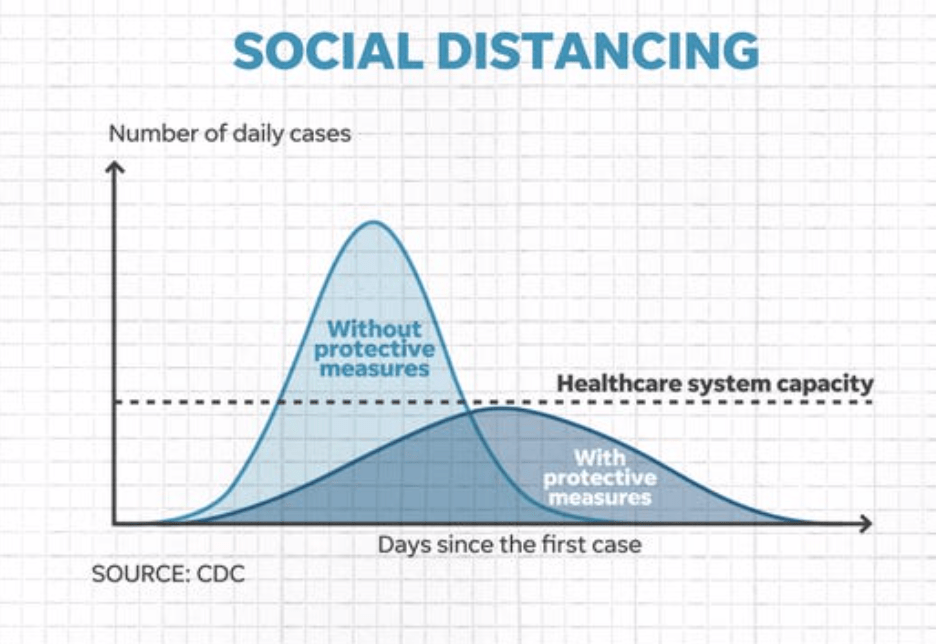
Last note to end on. Please prioritize yourself and others by social distancing. Social distancing is currently the most important factor in controlling the COVID-19 outbreak and allows the healthcare system to stay afloat. 

Heres a graphic from the CDC that shows how social distancing will work to prevent surpassing the healthcare system capacity.

Categories
Uncategorized

Let’s Talk Time Management

Hey Guys! I hope you enjoy some tips about time management! My cat, Holiday, also makes an appearance in the background so please enjoy that as well!

Categories
Uncategorized

But What About Tomorrow?

You’re sitting in English class when you get the email. Phones buzz and simultaneously pandemonium strikes the classroom. What once was a peaceful end to your day of classes takes a drastic turn.

School is canceled. The coronavirus has struck and all you have is a nondescript email telling you not to return tomorrow. Not even your professor has an idea of what to do. Cheering starts in the front of the classroom, while the science majors around you sit in silence. Only they can hear their heartbeats beating in their chest. 

Questions start to line up in your brain. What did this mean for you? How can you learn organic chemistry online? The midterm? Online Labs? 

No one is telling you anything. You refresh your emails with fast fingers hoping and praying for some kind of communication, but nothing. You have today to soak up your last few minutes at school before it all vanishes away for some unknown period of time. Your life is crumbling and the pieces are scattering around you, moving too far apart to be put back together. 

As a pre-med student, your focus has to be all things school and grades related. Will the medical schools understand there was a pandemic forcing me away from the place I want to be at oh so badly? Other people cheer with joy that school is canceled, while you are left gritting your teeth in the anxiety of what is to come. You email professors and if you are lucky to get a reply it reads “I’m not too sure yet.” All you can do is keep your head deep in the books as if it were all back to normal tomorrow, except it isn’t. It’s 11 pm and you are emailing back and forth with your professor about how class will go tomorrow. You don’t know. They don’t know. You try to sleep. Your head is on the pillow and your eyes are shut, yet your legs are restless and your mind is wandering. Not even the warming feeling of your cat rubbing against you can help these thoughts settle. 

Not to mention, the world around you is quickly shutting down. Toilet paper is gone. Soap is gone. The aisles are empty as if you are embedded in a post-apocalyptic horror film. Your hospital has run out of masks and you work in the emergency room. You keep telling yourself it’s fine. It’s all fine. But is it really fine?

Categories
Uncategorized

Everyday Rhetoric

Rhetorical analysis- something I really haven’t delved into since my AP Lang days. We see things advertised to us all day, every day. Each advertisement is designed to appeal to a specific audience. The rhetorical analysis unit has re-enlightened me to the idea that rhetoric is everywhere. We use rhetoric to convince people all of the time without realizing it. Ethos. Pathos. Logos. Repetition. Metaphors. These are things we see and are exposed to every day but often overlook. We analyze rhetoric without knowing it all of the time. How did that commercial make me feel? Why do I feel like I now need to go adopt every puppy at the pound? Probably because the rhetoric used in the commercial you just watched convinced you to.


This all goes on to teach us to be more discriminatory in the decisions we make. Are you doing something because you want to or was that youtube ad just incredibly effective in persuading you so? Rhetoric analysis has taught me to look out for these strategies when going on about my life in a non-academic setting.


By analyzing effective and ineffective methods of persuasion we can take these into account in our real, non-essay writing setting, lives. When I am trying to persuade or educate someone on a specific matter, I can more effectively go about doing so. I know that evoking emotions using pathos and also appealing to someone’s logic is important in persuasion. Not only do people decide with their hearts, but also their brains.


I believe this idea ties into Phyllis Mentzell’s beliefs on rhetoric outside of the classroom. Rider’s article reflects on the idea that rhetoric is not merely academic. Rhetoric is important in helping “you develop a repertoire of strategies for engaging with the world on your terms, even as it helps you understand how to respond when others try to set up the encounter on their terms.” People may have important and meaningful information that they want to inform someone about, but how this information gets delivered is equally as important. In order for the listener to really absorb what they are being told, they have to resonate with it. A speech that leaves someone in tears is one that is going to leave an impact on them. The “how” is important and rhetoric is what helps us develop the “how.”


From speeches to blog posts to everyday conversation, we can use rhetoric to help us deliver our messages in a more meaningful way that is more likely to leave an impact on the people encounter.

Categories
Uncategorized

Expectations vs. Reality

College, although a very exciting time in someone’s life, can also be a very stressful time. Your life is changing. You’re in a new environment with new people and the whole thing can feel pretty overwhelming. 

Prior to starting college, I had a few worries, but I was mostly excited to start. Every time I visited the Chapman campus I fell more and more in love and the Keck building seemed like a dream. I was starting with my best friend from high school, Nayiri, and it all seemed like it was going to be great. Hey, I loved science in high school so it couldn’t be too hard right? 

Heres a photo from my first time visiting campus after committing to Chapman!

My optimistic expectations quickly pivoted into actual reality. I started as a full-time college student and an ER EMT all within the same month. I hadn’t worked out my work schedule yet, so I was going from school, to work all night, back to school all day and going days without sleeping. 

At first, I didn’t handle it well, but like anything with life, it takes time to adjust to new things. I started to change my work schedule to working only on weekend nights. I learned to say no to picking up extra shifts. I figured out study methods that worked for me. I relied on my family and friends for support. I’ve never been one to get stuck in a rut, so I just had to change my perspective and figure out what works for me on the balancing act we call life. I quickly learned that 24 hours in a day may not feel like enough, but if you plan out your hours right, you sure can get a lot done. 

Talking to the students from Orange High was a great experience because it made me reflect on where I was at when I was their age. I always knew that I wanted to go to medical school so I was thinking about college from a really young age. It was interesting to hear what was going through their heads about college.

The girls I talked to were thinking about college and knew that they wanted to go, but didn’t have an idea of where yet. They had many questions about how people handle the workload that comes with college. I talked to them about how developing your own methods takes time and that’s okay. You don’t have to have it all figured out the way you walk into school- in fact, you really shouldn’t. I had similar questions about workload coming into college and I had many people try to scare me. I always- and still- hate it when people do that. You figure it out. You just do. I told the Orange High students that they shouldn’t let other people’s opinions scare them out of their own. I am excited to go back and talk to them about how to go about picking majors and looking into potential schools that they may be interested in! 

Categories
Uncategorized

Memes.The Modern Day Communication.

Memes. The modern-day ideal form of communication. Whether we are looking for a good light-hearted laugh or need to mask our actual emotions with twisted humor, there is a meme out there for your exact mood. Being the science and medical nerd that I am, I know my phone is packed full of some emergency medicine and all things science related memes. Need a good laugh about organic chemistry? I’m your girl. 

Huntington’s article, titled Subversive Memes, talks about meme’s role in today’s culture and writing. They are a form of visual rhetoric that is widespread among many ages and different types of people. Although seemingly lighthearted fun, memes often carry political and symbolic messages behind them. With a combined element of both semiotic and discursive approaches, memes can be examined as a form of visual rhetoric. Huntington describes memes as being something more than visual humor and I believe that this is very true in today’s culture. 

I chose this meme in particular because I thought it highlighted my feelings for the week pretty well. I write this to you all, with three hours of sleep on board, post organic chemistry midterm, and about to head into my twelve hour night shift in the ER. It’s the glorious life of a pre-med student I guess.  

I saw this meme and thought- wow this was made for me. The meme is intended for a pre-med or medical student that is likely feeling overwhelmed. Science students are often overworked and overwhelmed. Memes are a way to laugh through the pain, but also can share an important message. The surface level intent for the meme is the humor. However, like Huntington had stated, memes can have a deeper and more philosopchial intention behind their humorous facade.  In this case, the meme highlights the idea of mental health of students in pre-health or health majors. Of course, we often use humor to hide real feelings, which is why memes are likely so widespread among people. We can communicate real feelings in a light hearted and visually attractive way. Like Huntington said, memes can be more than simple visual humor. This meme has a definite targeted audience, as all pieces of writing do. 

From movie buffs to science nerds to medical students, memes are a form of visual rhetoric that can reach a widespread audience. They are also often very efficient in transparency. They express their meaning in an easy to look at, easy to understand way. 

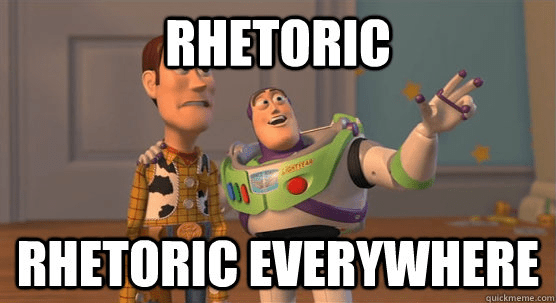
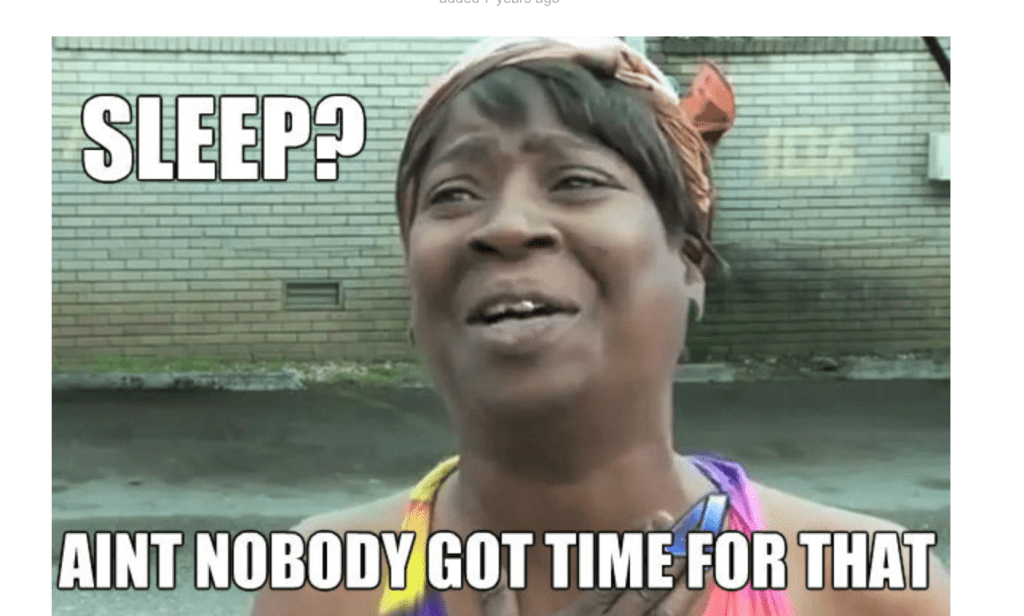
Memes have become a staple for most conversations online and there is often one out there for just about any situation. Now, I am off to work for the next twelve hours and I will leave you all with a personal favorite of mine that I use too often.


Design a site like this with WordPress.com
Get started